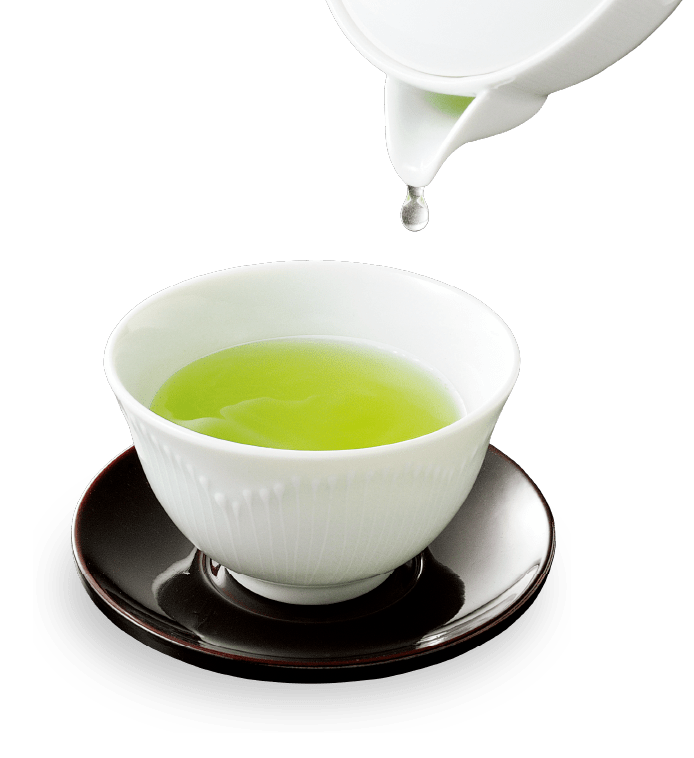
From ancient temples to modern homes, tea has quietly shaped the rhythm of Japanese life. Each era added its own color — from the meditative cups of monks, to the refined rituals of the tea ceremony, and now, to the daily moments of comfort shared around the world.
At Ichikawaen, we carry forward this legacy from Shizuoka—a land blessed with rich soil, mountain mists, and the clear waters of Mt. Fuji. Through careful cultivation and the skills of our “Chashi” , we preserve not only the taste of Japan, but the quiet spirit behind it.
Time changes everything — but the essence of tea remains. In every cup, there is harmony, respect, and a gentle reminder of what truly matters. Let this journey of Japanese tea connect the past and the present, and bring peace to your everyday moments.
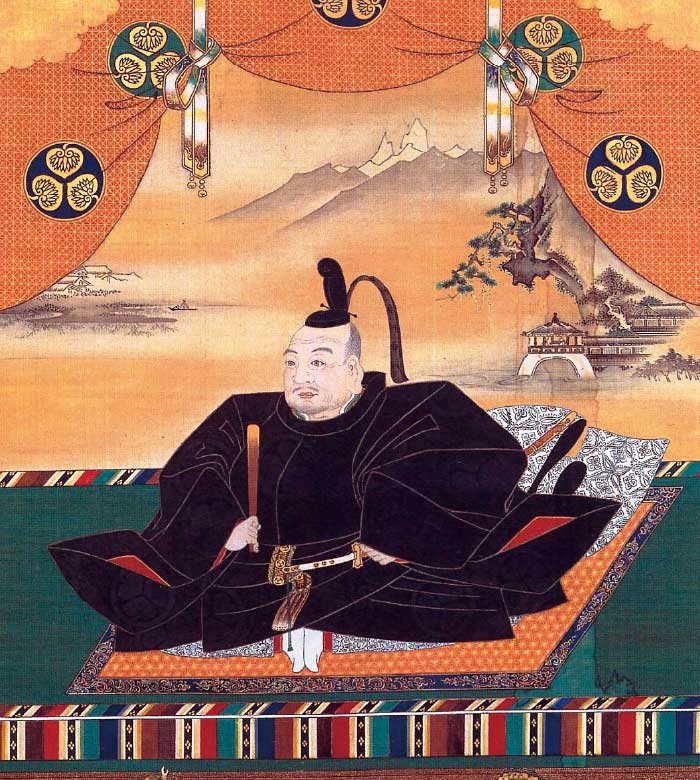
Tokugawa Ieyasu(1543~1616)
The history of tea in Japan is deeply intertwined with the journeys of Buddhist monks who crossed the sea to study in China. During the Kamakura period, many monks traveled to the Song dynasty to learn Zen teachings, and along with Buddhist philosophy, they brought back a culture of “preparing tea to calm the mind.” Among them, monks such as Shoichi Kokushi (Enni Ben'en), Daiō Kokushi (Nanpo Shōmyō), and Senkō Kokushi (Sengai Gibon) played a vital role in establishing the spiritual and cultural foundations of Japanese tea.
For these monks, tea was not merely a beverage; it was an essential part of spiritual practice- helping them maintain focus during meditation and purify the mind. After returning to Japan, they are said to have planted tea seeds around their temples and shared the custom of preparing tea with disciples and local communities. In this way, tea cultivation gradually spread from Kyoto and Uji to other regions, including Shizuoka.
In the Edo period, Tokugawa Ieyasu also made a significant contribution to the development of tea culture. Based in Suruga Province (present-day Shizuoka Prefecture), Ieyasu not only enjoyed tea himself but also positioned it as an important cultural element of Tokugawa shogunate, placing great emphasis on its quality and management. Tea Jar storehouses were established in Suruga, where carefully selected tea was strictly stored and later transported onward. This system was formalized as the tea Jar Procession (Ocha-tsubo Dōchū), ensuring that tea from Shizuoka was preserved as a product of exceptional quality and prestige, and laying the foundation for the region as a major tea-producing area.
Tea as a spiritual practice brought by monks, and tea as a cultivated culture supported by Tokugawa Ieyasu. Nurtured through both faith and governance, the culture of tea took deep root in Shizuoka and has been passed down to the present day.
Shizuoka became leading tea regions in Japan between the 18th and 19th centuries. Tea had been grown in the area for centuries, but it was the Meiji Restoration (late 1800s) that transformed Shizuoka's tea industry.
After the fall of the Tokugawa shogunate, many former samurai from the Shizuoka domain—loyal to the last shogun, Tokugawa Yoshinobu—returned to home (Shizuoka) and began cultivating tea as a new livelihood. They brought discipline, precision, and an entrepreneurial spirit to tea production, turning Shizuoka's hillsides into thriving tea fields.
At the same time, the opening of the port of Shimizu and the introduction of steam-powered processing machines made it possible to export tea directly to the United States and Europe. Shizuoka's reputation grew rapidly, and by the early 20th century, it had become the heart of Japanese green tea production.
Today, nearly half of all tea produced in Japan comes from Shizuoka. Behind every leaf lies a story of adaptation, innovation, and the enduring spirit of the people who believed in the power of tea to connect Japan with the world. Their devotion spread tea cultivation throughout regions like Kyoto, Uji, and eventually Shizuoka—where the climate and soil allowed it to flourish. What began as a spiritual practice grew into a cultural tradition, one that continues to bring people peace and connection across centuries.
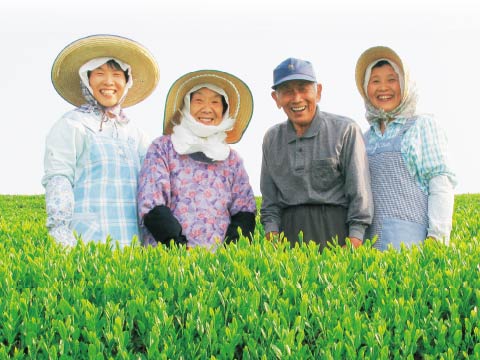
For tea farmers, tea trees are not simply crops.
They are like family—companions we grow alongside over many years.
In spring, we watch closely for the smallest signs of new buds.
When frost threatens, we protect them through the night.
Even after the first harvest is complete, the work never truly ends.
Care for the second and third harvests follows, and before long, we are already preparing the soil for the year ahead.
There is no clear division between workdays and rest.
What keeps our hands moving is a single, unwavering desire: to grow the finest leaves possible.
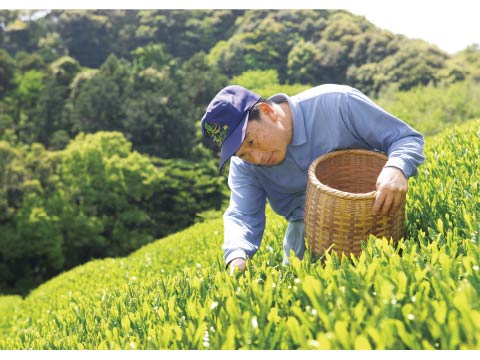
When the calls of bush warblers echo through the hills and the tea fields are covered in vibrant new green, the season of the first harvest finally arrives.
This first harvest, picked during a brief and precious window, contains the full strength the tea trees have stored over an entire year.
Ichikawaen understands the value of this moment.
Ichikawaen employees visit our fields each year, observe the leaves with their own eyes, and listen carefully—to both our words and the subtle expressions of the tea itself.
Guided by the belief that “when you buy tea, you are choosing the people behind it,”
they have earned our willingness to entrust them with our harvest.
The tea grown on the sun-rich Makinohara Plateau develops a bold character and deep body.
To bring out these qualities, deep-steaming is essential—a method in which even a few seconds can alter the final taste.
Reading the condition of the leaves, responding to the weather, and making precise decisions in the moment requires human judgment and long experience.
This is the craft we confidently place in the hands of Ichikawaen “Chashi”.
No two years of tea are ever the same.
Each season's buds carry their own expression, and each cup exists only once in time.
Tea is truly ichigo ichie—a once-in-a-lifetime encounter.
With pride in the 150-year history of tea cultivation on the Makinohara Plateau, built by generations before us,
we entrust the final steps to true professionals.
Being able to hand over our leaves with the feeling of sending off a child into the world is, for us, an irreplaceable source of reassurance.
Those who grow the tea and those who refine it may stand in different roles,
but we are united by the same purpose: to deliver truly good tea.
We will continue to honor the time, care, and human spirit behind every cup,
and pass it on with integrity to the next generation.
That is our unwavering commitment as tea farmers.